The honest answer is that service intervals for automatic gates in Reno depend more on how often your gate cycles, how it is built, and how it handles local weather than on any single calendar rule. A light-use residential driveway gate and a busy commercial entrance gate live very different lives, even when they sit a few blocks apart.
Understanding what drives service timing helps you plan around real operating conditions rather than guessing or waiting for something to fail. For property owners evaluating gate systems or maintaining existing ones, A1 Fence LV works through these questions regularly with clients across Northern Nevada.
Why There Is No Universal Service Schedule
You might expect a straightforward answer here, something like “service your gate every six months” or “once a year is enough.” In practice, automatic gate systems do not age on a fixed timeline. They age based on use, exposure, and mechanical stress.
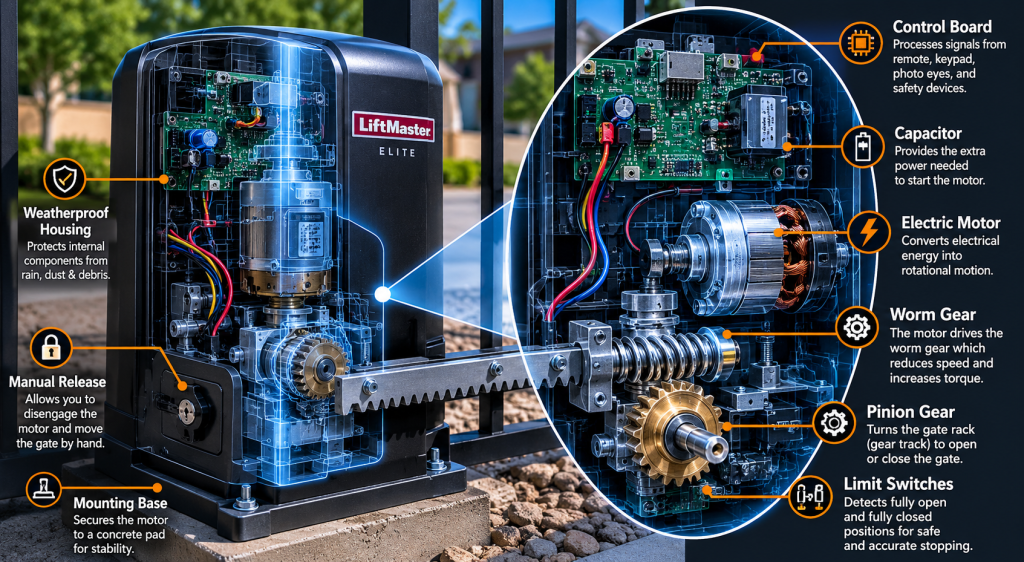
Every time your gate opens and closes, the operator motor works against the weight of the gate. Hinges, rollers, tracks, chains, or arms absorb that movement. Over hundreds or thousands of cycles, small amounts of wear accumulate in ways you cannot see until the gate starts behaving differently.
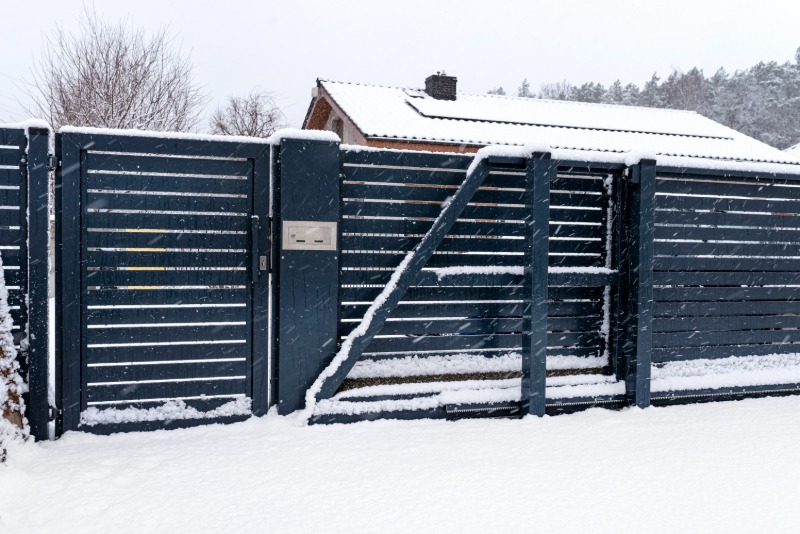
Reno’s climate adds another variable. Hot summers affect lubricants and seals. Cold winters stiffen those same materials and introduce snow, ice, and temperature swings that change how the operator performs at the ends of travel. A gate that runs smoothly in October may hesitate or strain in January if it has not been checked.
This is why service frequency ties to actual operating conditions rather than a date on the calendar. A residential driveway gate that opens four times a day lives differently than a multi-tenant vehicle gate that cycles dozens of times per hour. The second system will show wear faster and needs tighter attention to stay reliable.
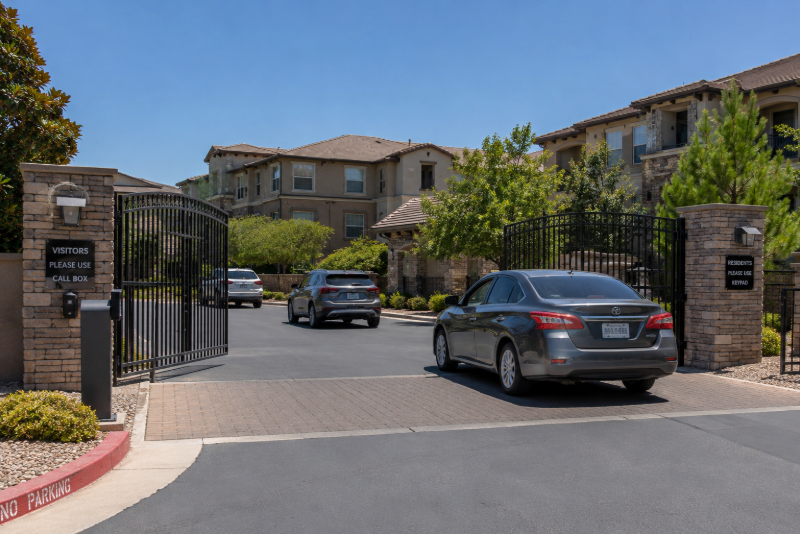
For most residential gates in Reno, periodic inspection catches small alignment and lubrication issues before they grow. For commercial or shared access gates, shorter intervals reflect the reality that higher duty cycles accelerate wear on every moving part.
What Service Actually Covers
When we talk about servicing an automatic gate, we are talking about more than just the operator. The system includes the physical gate and its supporting structure, the operator that moves it, and the safety devices and controls that tell it when and how to move.
A proper service check looks at mechanical alignment of the gate itself. Are the hinges, rollers, or cantilever tracks still positioned correctly? Is the gate binding or dragging at any point in its travel? Small alignment shifts can force the operator to work harder, which shortens its life and increases the chance of a mid-cycle failure.
The operator gets attention too. Mounting condition, limit settings, and how the motor responds under load all matter. In cold weather, operators can strain if lubricants have thickened or if ice has formed in the travel path. Checking these elements before winter hits reduces the chance of a breakdown on a cold morning when you need the gate most.
Safety devices are part of the inspection as well. Photo-eyes, entrapment sensors, and reversing mechanisms rely on proper alignment and operation. A gate that still moves but has a misaligned safety sensor is not performing as intended, even if it opens and closes on command.
In Reno’s environment, service also accounts for dust accumulation, UV exposure on wiring and seals, and the freeze-thaw cycles that quietly affect components throughout the year. These are not extreme-weather-only concerns. They are cumulative stresses that show up in how the system performs over time.
How You Will Notice When Service Is Overdue
Most owners do not realize their gate needs attention until it starts behaving differently. The gate does not usually stop working all at once. Instead, you notice changes.
The gate moves slower than it used to. It hesitates at certain points in its travel. It stops short of fully closed and you have to run the cycle again. Noise increases, especially in cold weather when lubricants are thicker and metal contracts slightly.
These are signs that small mechanical or alignment issues have accumulated to the point where they affect everyday performance. The gate is still working, but it is working harder than it should.
On commercial or multi-tenant sites, the signs often show up as intermittent access problems. Users report that the gate did not respond, or the operator tripped out under load during a busy entry period. These are reliability issues that affect how people experience the system, even if the gate itself has not failed outright.
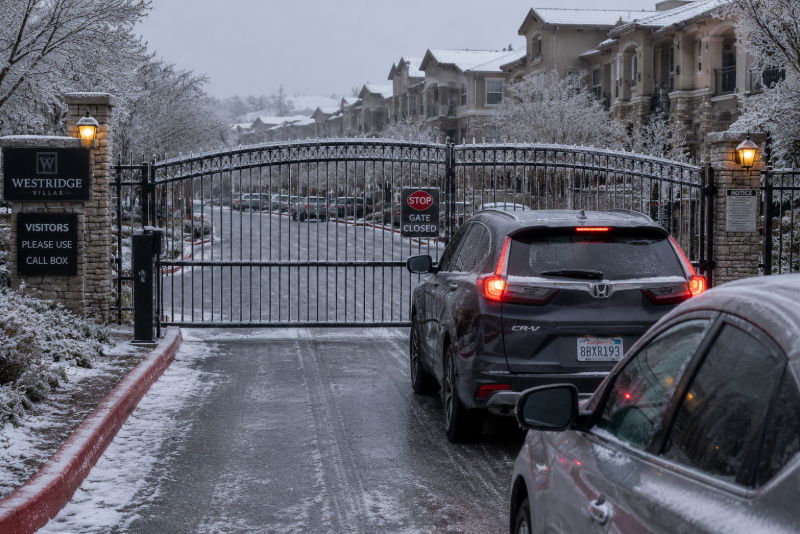
In Reno’s winters, service needs can surface faster. Snow pushed against the gate, ice in the travel path, and cold-soaked equipment all stress a system that may already be running with minor mechanical issues. If the gate has not been checked heading into winter, you are more likely to notice problems during or after cold spells.
The practical point here is that waiting for a complete failure is not the same as managing the system. By the time the gate stops moving entirely, the underlying issue has usually been building for a while. Catching it earlier is less disruptive and typically less expensive.
Matching Service Intervals to Your Situation
The most useful way to think about service intervals is to look at how your gate actually operates and what it lives through.
A light-use residential driveway gate that opens a handful of times a day experiences slower wear. It still accumulates dust, corrosion, and small alignment changes over time, but the pace is gradual. For these systems, periodic inspection, often once or twice a year, catches issues before they affect daily use.
Heavier or longer gates, gates with more moving hardware like cantilever tracks or complex hinges, and systems that see frequent vehicle traffic have more potential wear points. These systems benefit from more frequent checks because the consequences of deferred maintenance show up faster.
Commercial and multi-tenant gates fall into a different category. Higher daily cycles mean the operator, hardware, and safety devices are working harder every day. Shorter service intervals reflect the reality that uptime matters more and that small issues escalate faster under load.
Reno’s seasonal conditions also influence timing. Many owners find it useful to schedule service before winter, when the system will face its hardest operating conditions. Checking lubrication, alignment, and operator performance heading into cold weather reduces the chance of a problem when you are least prepared to deal with it.
On the cost side, aligning service frequency with actual usage and conditions tends to control long-term expense. Running a misaligned or binding gate for years forces the operator to work harder and shortens its life. Catching wear early avoids the larger repairs that come from running a stressed system too long.
What This Means for Reno Property Owners
The main shift in perspective is to see your automatic gate as a working system that needs attention in proportion to how hard it is used and what it lives through. It is not a one-time install that runs indefinitely on its own.
When you think about service intervals in terms of gate cycles, visible behavior, and local climate, the timing starts to feel less like an arbitrary rule and more like a natural part of keeping a complex moving system operating the way you expect it to.
For property owners in Reno and Northern Nevada, these questions usually come up when performance changes, when planning a new system, or when reviewing existing gates as part of broader maintenance. A1 Fence LV works with residential, commercial, and HOA clients on automatic gate systems built around long-term reliability and real operating conditions in this climate. If you are evaluating service needs or planning a new installation, you can request a quote online at https://a1fencelv.com/request-a-quote, call (702) 904-5998, or email zac@a1fencelv.com.
source https://a1fencelv.com/how-often-should-automatic-gates-be-serviced-in-reno/

No comments:
Post a Comment