Modern automatic gates should have layered safety features that work together rather than relying on any single device. That means built-in obstruction sensing in the operator, external devices like photo-eyes and safety edges protecting entrapment zones, controlled movement profiles, and a usable manual release. In Reno conditions, those layers need to stay effective through temperature swings, ice, snow, and the gradual wear that comes with years of daily operation.
The goal is a system where multiple features back each other up, so one dirty sensor or one cold morning does not leave the gate unprotected. For property owners evaluating automatic gate systems, understanding what these features actually do in practice matters more than checking boxes on a spec sheet. A1 Fence LV works with property owners across Northern Nevada to design systems where these safety layers hold up over time.
Why Safety Concerns Come Up With Automatic Gates
You might assume that if your gate opens with a remote or keypad, it already meets current safety expectations. Then you notice it pushing harder than you expected, stopping randomly in winter, or closing when someone is still in the opening.

It is not always clear which features are supposed to protect people and vehicles. You may wonder whether a single photo-eye is enough or why the gate behaves differently when it is cold, dirty, or starting to show wear.
That uncertainty makes it difficult to tell if your gate is simply quirky or if it is missing the safety layers modern systems are expected to have. Many older installations relied on little more than a basic operator with no external sensors at all. Some systems installed years ago had a single beam that only protected one direction of travel.
The difference between those setups and current expectations is significant. What was considered acceptable a decade or two ago would not pass the layered protection standard that defines modern automatic gate safety today.
For property owners, facility managers, and HOA boards evaluating systems, the question is not just whether the gate moves. It is whether the system can detect obstructions before contact, respond appropriately when something goes wrong, and continue doing so reliably through seasonal changes and mechanical wear.
Understanding what each safety layer does and how they work together helps you recognize when a system is actually well protected versus when it just appears functional.
How Modern Automatic Gate Safety Systems Work Together
A modern automatic gate is a system with several parts that need to function together. The motorized operator moves the gate. Sensors watch for obstructions.

Controls tell the system when to move and how to respond when something triggers a safety device.
The operator’s internal electronics monitor how hard the motor is working. When the gate runs into resistance beyond a set threshold, the control board can stop or reverse movement. This is useful, but it only reacts after the gate has already made contact with something. By the time the operator feels the obstruction, the gate is already pushing.
External devices add protection before contact happens. Photo-eyes cast infrared beams across the opening. When something breaks the beam, the control board registers an obstruction and responds by stopping or reversing the gate. In everyday use, this is what prevents a closing gate from hitting a car pulling through slowly or a person crossing the driveway at the last second.
Safety edges are pressure-sensitive strips mounted on leading edges or other pinch-prone areas. When compressed by contact, they signal the operator to stop or reverse. On sliding gates, edges often sit on the leading edge and sometimes on posts or nearby structures. On swing gates, they may cover closing edges or bottom edges depending on the layout.
Controlled movement matters as well. Newer operators support adjustable speeds, soft starts, and soft stops. The gate slows down near fully open or fully closed positions rather than slamming into its stops. This reduces impact forces if something goes wrong and gives people and drivers more time to react.
Manual release is another required layer. Modern systems include a way to disconnect the operator so the gate can be moved by hand during a power outage, operator failure, or emergency. Usually this is a keyed disconnect or lever on the operator housing.
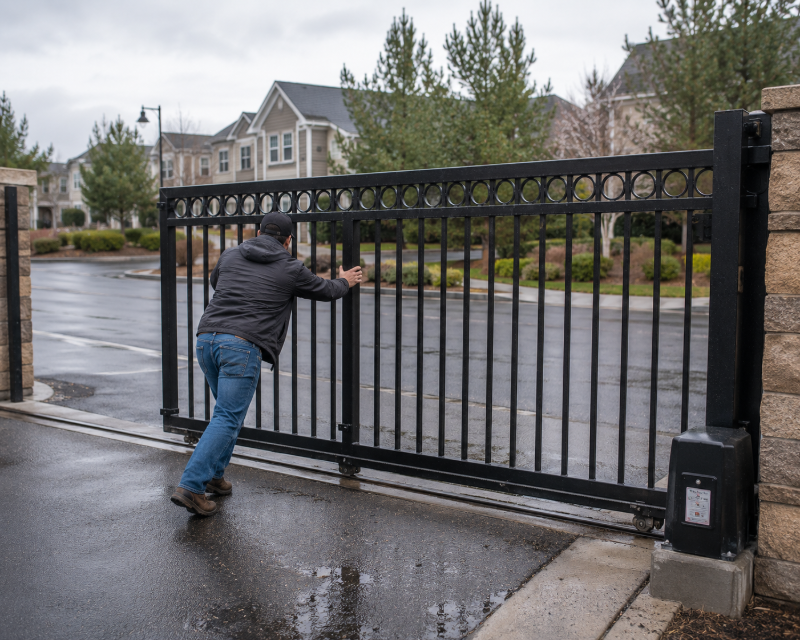
Each layer addresses a different part of the problem. Internal sensing catches hard obstructions after contact. Photo-eyes prevent contact across the travel path. Edges protect pinch points and tight gaps. Controlled movement reduces severity. Manual release provides a way out when the system fails.
What Affects Safety Performance Over Time
For reliability, what matters is how those sensors, operator settings, and mechanical parts hold up in real use as dirt, weather, and wear accumulate. A system that works perfectly on installation day may behave very differently after a few seasons.
Photo-eyes are exposed to dust, dirt, landscaping overspray, snow, and ice. These conditions can cause false trips where the gate refuses to close, or they can make the system think everything is clear when it is not. When photo-eyes get blocked by snow or plants, some users respond by bypassing the safety instead of fixing the cause. That removes a layer of protection without anyone realizing it until something goes wrong.
Safety edges can silently stop working if their wiring or rubber is damaged, especially near the ground or where vehicles contact them. The gate keeps moving, but that protection layer at pinch points is gone. Water intrusion and mechanical abuse take a toll over years of operation.
Operators with force limits set too high, or never revisited after the gate’s mechanics change, can push harder than intended. As tracks fill with ice or debris and hinges or rollers wear, the operator may need to work harder to move the gate. What was once a reasonable force setting can become too aggressive as movement gets stiffer.
Manual release mechanisms can sit unused for years. When you actually need to move the gate by hand during a power outage or malfunction, you may find the release is stiff, stuck, or unfamiliar. Its usefulness depends on people knowing where it is and having access to it.
In a climate like Northern Nevada with cold winters, freeze and thaw cycles, and occasional snow and ice, these effects are more pronounced. Ice in tracks causes the gate to bind. Metal components expand and contract enough to change clearances. Photo-eyes get blocked by snow piles or splashed mud.
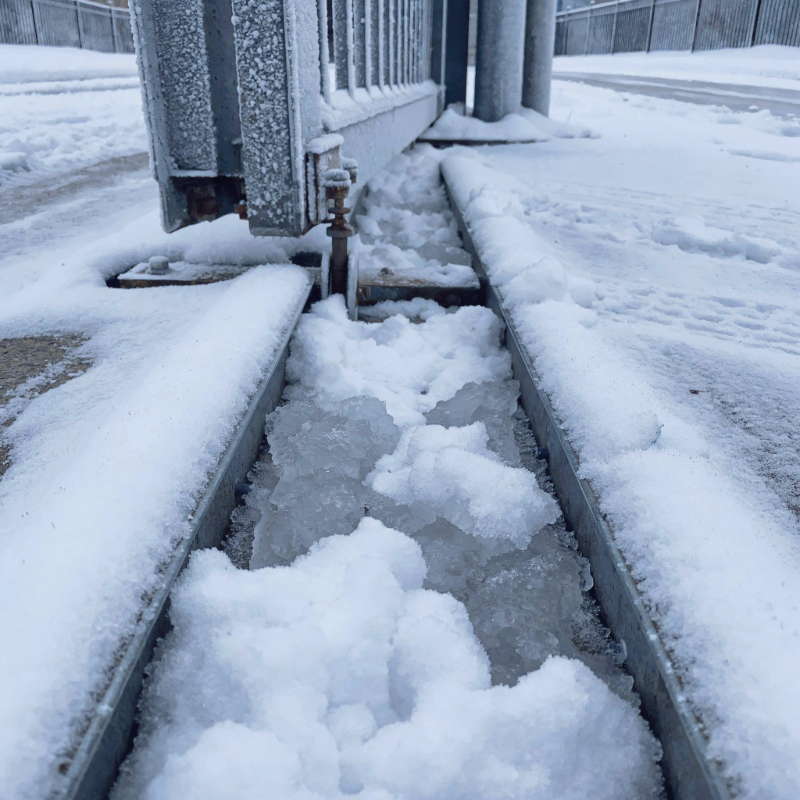
Seasonal changes often show up as intermittent safety trips, gates that stop mid-travel, or systems that behave differently in winter compared to summer. That inconsistency can mask underlying problems until the gate stops working altogether or until a safety device quietly drops out of service without anyone noticing.
Long-term cost is influenced by how well safety devices prevent collisions, how often components need attention, and how the system responds as parts age. Omitting or bypassing safety devices may seem simpler in the short term but usually leads to higher risk of damage and unplanned downtime.
Common Misunderstandings About Automatic Gate Safety
Many people still assume any automatic gate with a motor is automatically up to date on safety, even if it was installed years ago with little more than a basic operator. The age of the operator or the fact that it opens with a remote does not guarantee layered entrapment protection.
There is a widespread belief that the motor will always stop before it can hurt anything. In reality, force sensing reacts only after the gate is already pushing on an obstruction. If the force limits are set too high or have drifted over time, the gate may push quite hard before the operator registers a problem.
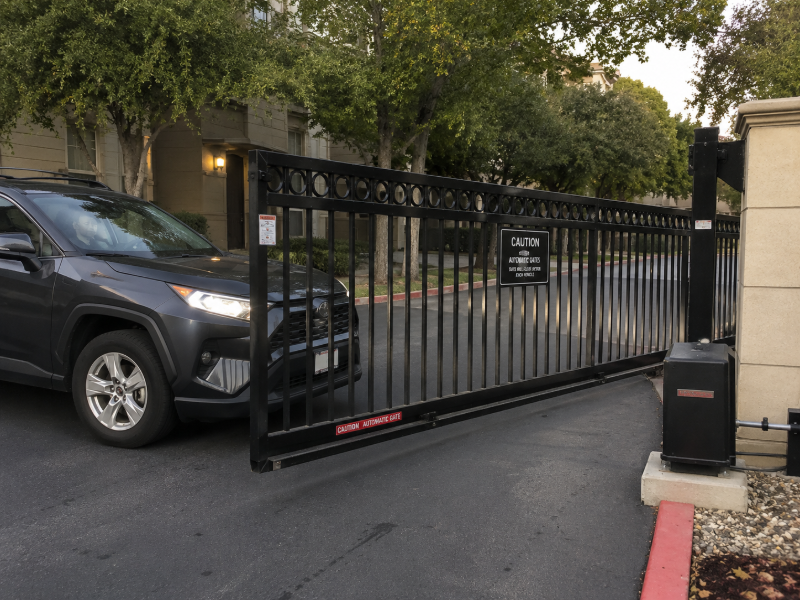
Relying on a single photo-eye is another holdover from earlier installations. One beam does not protect both directions of travel in many layouts. It also cannot cover all the pinch points created by posts, walls, and fence panels near the gate. Modern systems are expected to address multiple entrapment zones, not just the main opening.
Some owners think making the gate heavier or stronger makes it safer. A heavier gate often requires a more powerful operator and higher forces to start and stop. Without matching safety devices and careful tuning, a strong gate can create more severe impacts, not fewer.
Others expect to install a gate once and never think about safety devices again. They assume the system will operate indefinitely with no attention. In reality, safety devices can misalign, get dirty, or fail over time. Mechanical components wear in ways that affect force sensing and movement. Seasonal changes alter how smoothly the gate moves.
Assuming zero maintenance is needed leads to safety devices quietly dropping out of service. The gate still opens and closes, so everything seems fine. But the layers that were supposed to protect people and vehicles may not be doing their job anymore.
Residential gates are not exempt from these concerns. Lower cycle counts do not eliminate the risk of a single severe incident involving children, pets, or guests unfamiliar with the system.
What This Means for Property Owners in Reno
Looking at modern automatic gates as complete systems rather than just motors or single devices makes it easier to see why layered safety is now expected. Internal sensing, external sensors, controlled movement, and a workable manual release all have distinct roles. When they work together, they create multiple chances to detect an obstruction and respond before serious contact occurs.
It also becomes clear that safety is not frozen at the moment of installation. Weather, dirt, and mechanical changes keep affecting how the gate moves and how those safety layers respond over time. In a climate that swings between seasons, systems need to be designed and maintained with that variability in mind.
Questions about what safety features an automatic gate should have usually come up when a gate is being installed, upgraded, or repaired. That is when the full system of operator, sensors, hardware, and controls is visible and the way they interact in a specific driveway or property layout can be evaluated.
For property owners in Reno and surrounding Northern Nevada communities, this means thinking beyond whether the gate opens and closes. It means asking whether the system can detect obstructions before contact, whether the safety devices are positioned to cover actual entrapment zones, and whether the setup accounts for ice, cold, and wear over years of operation.
A1 Fence LV works with property owners across Northern Nevada on automatic gate systems designed for these conditions. Zachary Thompson brings more than 25 years of hands-on experience across fabrication, installation, operator selection, and access control integration, with practical knowledge of what holds up in seasonal climates and what tends to cause problems down the road.
If you are reviewing options for an automatic gate or evaluating an existing system, you can request a quote online at https://a1fencelv.com/request-a-quote. For properties ready to move forward or dealing with questions about current system performance, submitting a quote request online is the simplest starting point. You can also call (702) 904-5998 or email zac@a1fencelv.com.
source https://a1fencelv.com/what-safety-features-should-modern-automatic-gates-have/

No comments:
Post a Comment