Loose fence ties allow chain link fabric to separate from the framework because they no longer hold tension against the mesh. This creates visible sagging, gaps along the bottom rail, and accelerated wear at attachment points. For commercial properties in Las Vegas, where wind stress and thermal cycling are constant factors, understanding how tie failure progresses helps property managers and facilities teams address problems before they escalate into larger structural repairs.
When chain link fabric begins pulling away from posts and rails, the issue rarely starts with the fabric itself. The connection points, specifically the metal ties securing mesh to the frame, are almost always the first component to fail. Commercial security fence systems rely on consistent tension distribution across the entire fabric surface, and that distribution depends entirely on properly functioning ties.
How Fence Ties Maintain Fabric Tension
Fence ties serve as the mechanical connection between the chain link mesh and the structural framework. Each tie wraps around a rail or post and hooks through the fabric, creating a fixed point that prevents lateral movement.
When ties are properly installed and tensioned, they distribute the load across multiple attachment points. This prevents any single section of fabric from bearing excessive stress. The system works as a unified surface rather than a collection of independent panels.
In commercial applications, the number and spacing of ties directly affects how well the fence resists wind loading. Facilities with large uninterrupted runs of chain link, such as storage yards or equipment compounds, depend on consistent tie spacing to maintain fabric alignment.
Southern Nevada wind conditions place continuous stress on perimeter fencing. Gusts pull against the mesh surface, and each tie absorbs a portion of that force. When ties loosen or fail, adjacent ties must compensate. This creates uneven load distribution and accelerates failure at neighboring attachment points.
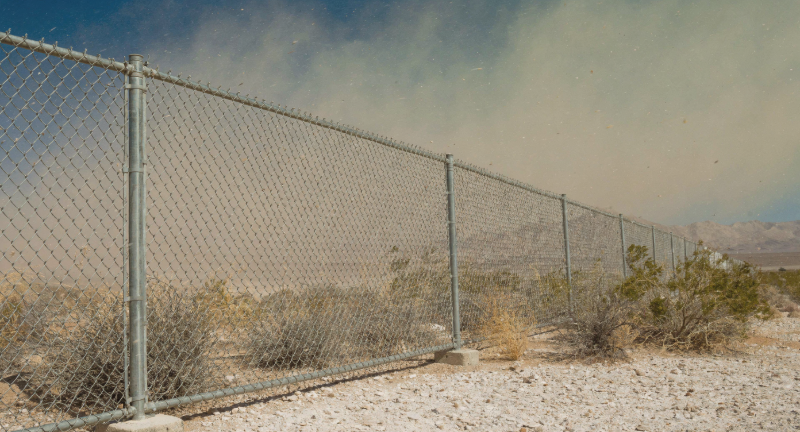
The fabric itself does not stretch significantly under normal conditions. When it appears to sag or bow, the cause is almost always tie failure rather than fabric degradation. The mesh shifts because it is no longer anchored at the intended points.
Common Causes of Tie Loosening in Commercial Environments
Metal fence ties degrade through a combination of mechanical fatigue and environmental exposure. In Las Vegas, UV radiation and extreme heat accelerate this process by breaking down the protective coatings on galvanized and aluminum ties.
Repeated thermal cycling causes metal to expand and contract. Over hundreds of heating and cooling cycles, ties gradually lose their grip on the rail or post. This is especially pronounced on south and west facing fence lines that receive direct afternoon sun throughout the summer.
Wind induced vibration also contributes to tie loosening. Even moderate wind creates micro movements in the fabric. These movements work against the tie wrap, slowly rotating or unwinding the connection. Over time, ties that were originally tight become loose enough to allow fabric slippage.
Impact damage from equipment, vehicles, or debris can deform ties without breaking them. A tie that has been bent or stretched may still appear attached but no longer holds tension. This type of hidden damage is common along loading areas and vehicle circulation paths.
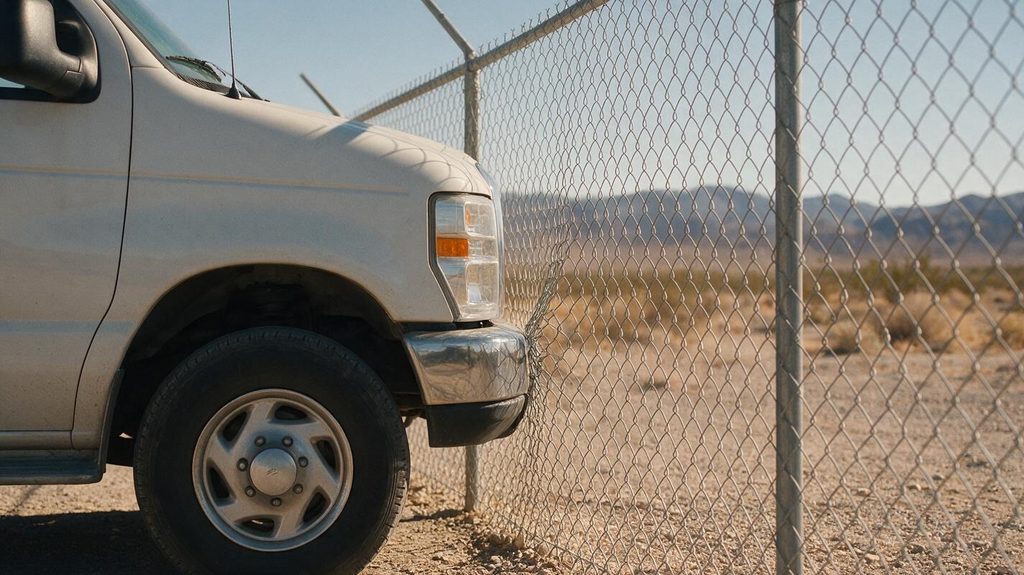
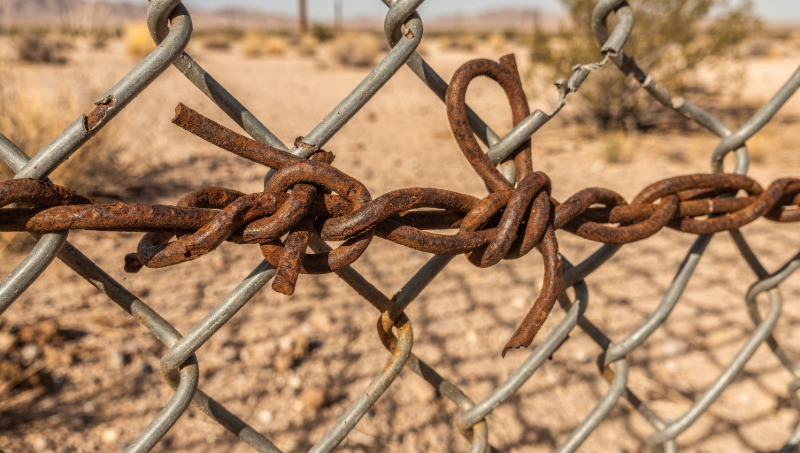
Corrosion weakens tie material and reduces its ability to hold shape under load. Ties installed in areas with irrigation overspray or chemical exposure degrade faster than those in dry locations. Commercial properties with industrial processes or equipment washdown areas often see accelerated tie failure in adjacent fence sections.
Improper initial installation also contributes to early loosening. Ties that were not fully seated during construction may hold for months or years before working free. This is particularly common when fence installation occurs on a compressed schedule or when crews are unfamiliar with specific tie types.
How Fabric Separation Progresses Without Intervention
Fabric separation typically begins at a single loose tie and spreads outward. Once one attachment point fails, the adjacent ties absorb additional load. This accelerates their loosening and creates a cascading failure pattern.
The first visible sign is usually a slight bulge or wave in the fabric surface. This indicates that the mesh is no longer held flush against the framework. At this stage, the fabric has begun shifting but has not yet created a significant gap.
As more ties fail, the fabric pulls away from the top rail or line posts. Gaps appear between the mesh and the frame. These gaps grow larger with each wind event as the unsupported fabric catches more air.
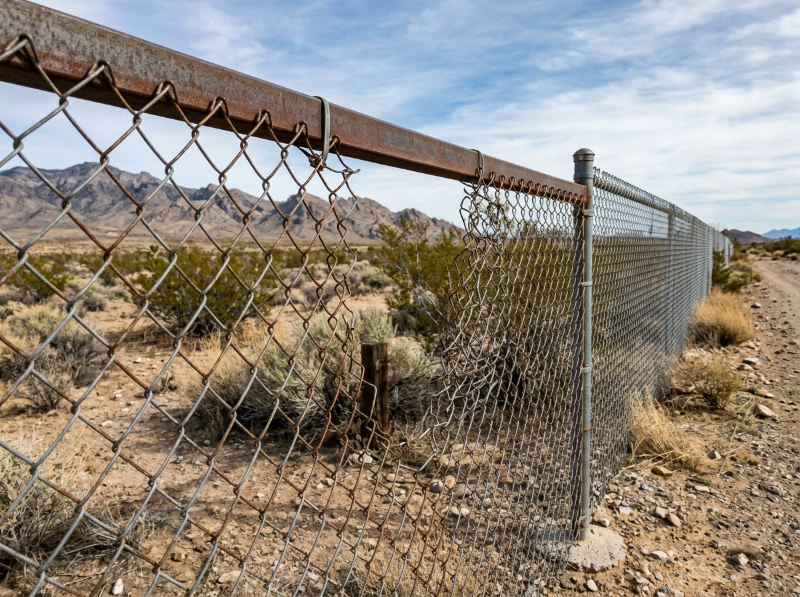
Bottom rail separation creates ground level gaps that compromise perimeter security. On commercial properties, this is a particular concern for equipment yards, storage compounds, and any site where unauthorized access is a liability.
Fabric that has pulled away from multiple attachment points begins to fold or bunch. This accelerates wear along the fold lines and can cause permanent deformation. Once the mesh has been repeatedly creased, it may not return to its original shape even after ties are replaced.
In severe cases, the fabric can separate entirely from a post or rail section. This creates an obvious breach in the fence line and typically requires more extensive repair than simple tie replacement.
Inspection and Maintenance Considerations for Commercial Properties
Regular tie inspection allows facilities teams to identify loosening before fabric separation becomes visible. This is particularly important for perimeter fencing that is not directly observed during daily operations.
Inspection should include visual assessment of tie condition and manual testing of attachment tightness. Ties that rotate freely or show visible gaps between the wrap and rail have lost effective tension. Corroded or deformed ties should be flagged for replacement regardless of whether they currently appear tight.
High stress areas require more frequent inspection. These include corners, gate openings, ends of long runs, and any section exposed to prevailing wind direction. Fence lines adjacent to vehicle traffic or equipment operation also see higher tie stress.
Tie replacement is a relatively straightforward repair when addressed early. Waiting until fabric separation is advanced often means the fabric itself has been damaged and requires partial replacement. The cost difference between proactive tie maintenance and reactive fabric repair is significant on large commercial properties.
Documentation of tie condition during routine inspections supports lifecycle planning for perimeter fencing. Properties with older fence systems can track degradation rates and budget for systematic tie replacement before failures accumulate.
Coordination with fence contractors for periodic tie assessment and replacement allows facilities teams to maintain perimeter integrity without dedicating internal labor to specialized tasks.
Addressing Tie Failure in Las Vegas Commercial Fence Systems
Tie loosening is a predictable maintenance issue rather than a sign of system failure. Commercial properties in Southern Nevada should expect tie degradation as part of normal fence aging, particularly on older installations or those in high exposure locations.
Replacement ties should match the original specification for material and size. Using lighter gauge ties or incompatible materials can result in faster failure and potential damage to the fabric or frame.
For properties with extensive chain link perimeters, scheduled tie replacement on a rotating basis can prevent the accumulation of loose ties across multiple fence sections. This approach spreads maintenance costs over time and reduces the likelihood of widespread fabric separation.
In situations where fabric has already pulled away, repair typically involves re tensioning the mesh and installing new ties at closer intervals than the original spacing. This compensates for any permanent stretch in the fabric and restores proper load distribution.
A1 Fence LV works with commercial property managers and facilities teams across the Las Vegas Valley on fence and gate repair projects, including tie replacement and fabric retensioning.
For properties evaluating current perimeter conditions or planning maintenance for aging chain link systems, submitting a quote request online at https://a1fencelv.com/request-a-quote provides a practical starting point. Teams coordinating active projects can also reach Lalo Flores at 702-504-0765 or lalo@a1fencelv.com.
source https://a1fencelv.com/why-loose-fence-ties-cause-chain-link-fabric-to-pull-away/

No comments:
Post a Comment