When a slide gate stops moving the way it used to, the rollers are often the first place to look. These components carry the weight of the gate and allow it to travel smoothly along its track. When they wear down, bind, or fail, the gate feels heavier, moves unevenly, or starts making sounds that were not there before.
Understanding what these changes mean helps you recognize when roller repair or replacement is likely part of the picture. For property owners evaluating automatic gate systems in Northern Nevada, knowing how to read these signals keeps the system reliable through seasonal stress and daily use.
Why Slide Gate Rollers Wear Out Over Time
Slide gates work by rolling horizontally along a track or guide surface rather than swinging open like a traditional hinged gate. The rollers make this possible. They are mounted on the gate frame or on support posts, and they interact directly with whatever surface guides the gate’s travel path.
Rollers can be made from metal, nylon, or other engineered materials. Some ride on bearings, others on simpler bushings. The material and bearing design affect how much friction the gate encounters and how much wear accumulates over time.
In practical terms, these are moving parts under constant load. Every time the gate opens or closes, the rollers carry weight and absorb stress. Over months and years of use, that adds up.
In Reno and surrounding Northern Nevada, rollers also deal with debris, freeze-thaw cycles, and temperature swings. Gravel from driveways, leaves, ice formations, and wind-blown dirt all work their way into the roller assemblies. This contamination accelerates wear and can cause binding or resistance even when the gate frame itself is structurally sound.

Most roller issues develop gradually. You might notice a little extra resistance one day, or a sound that comes and goes. If those early signs are ignored, the problems tend to progress until the gate no longer moves smoothly or stops mid-travel altogether.
The key point is that rollers behave like wear parts, not permanent structural components. Expecting them to last as long as the gate frame itself sets up frustration when performance changes show up earlier than anticipated.
What Roller Problems Feel Like in Everyday Use
The most practical way to recognize roller wear is through how the gate behaves when you use it. If the gate no longer moves the way it did when it was new, that change in feel is usually the first signal.
One common sign is increased resistance. The gate suddenly feels heavier or harder to push, even though nothing else has changed. In automatic systems, this often shows up as the operator appearing to strain or slow down mid-cycle. The motor is working against added friction from the roller assemblies, not a structural problem with the gate itself.
Jerky or uneven motion is another indicator. Instead of gliding smoothly from open to closed, the gate catches, bumps, or sticks at certain points along its travel. This typically happens when rollers develop flat spots, seize partially, or ride over damage in the track surface.
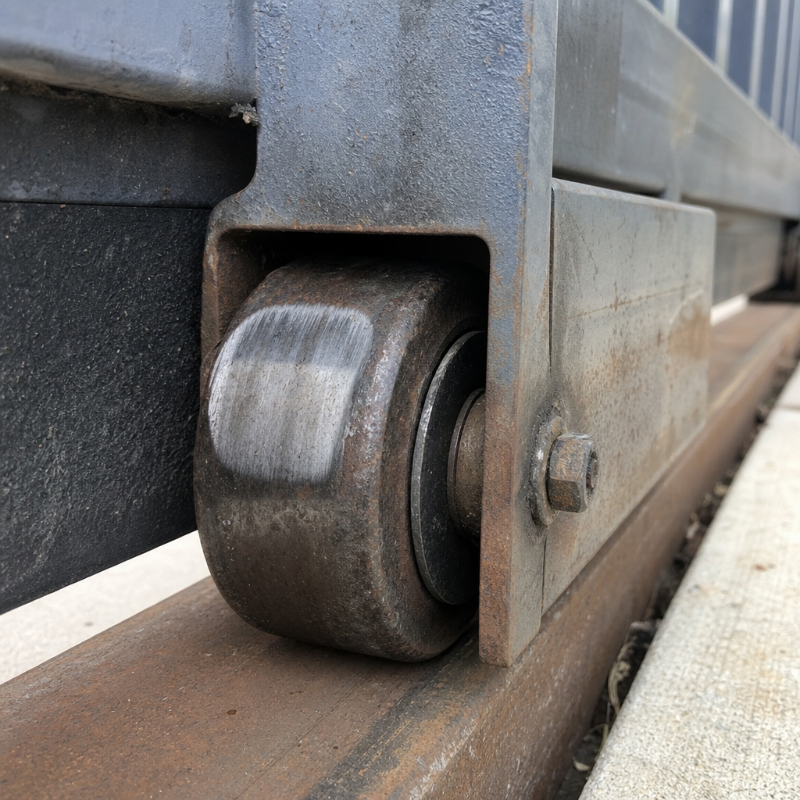
New noises are often the most obvious clue. Grinding, squealing, scraping, or clunking sounds that were not present before usually point to roller degradation or bearing failure. People often describe this as a “metal on metal” sound or something dragging, even when the actual cause is internal to the roller hardware.
In Northern Nevada winters, you might notice the gate behaves differently in cold months compared to warmer periods. Lubrication thickens, moisture freezes around exposed components, and seasonal debris accumulates. A gate that moved smoothly in September may feel sluggish or noisy by January without any visible change to the structure.
These day-to-day signals matter because they often appear well before anything looks visibly broken. The gate frame can appear solid while the moving hardware underneath is quietly deteriorating.
Common Misunderstandings About Slide Gate Rollers
One of the most persistent misconceptions is that rollers should last as long as the gate itself. In real operating conditions, that expectation rarely holds. Rollers are subject to friction, contamination, and mechanical load in ways that static structural elements are not. Treating them as permanent components leads to surprise when performance degrades.
Another common assumption is that movement problems automatically mean something is wrong with the motor or electrical system. In practice, rollers that are binding, seized, or misaligned can cause an operator to strain, slow, or fault even when the motor and controls are functioning correctly. The resistance originates at the hardware level, not the electrical level.
Some property owners believe that if the gate still travels from open to closed, the rollers must be fine. This overlooks early-stage wear where rollers are functional but already degrading unevenly or damaging the track. Waiting until the gate stops completely often increases the eventual repair scope.
There is also a tendency to interpret scraping or grinding sounds as normal, especially on older all-metal systems. While these gates may have always had some operational noise, progressive changes in sound character or volume often indicate wear that is advancing rather than stable.
The “set it and forget it” mindset persists around slide gates, particularly when the installation looked solid at first. In reality, gates exposed to wind-blown debris, freeze-thaw cycles, and regular driveway use rarely stay maintenance-free indefinitely. Expecting otherwise leads to deferred attention and larger problems down the line.

For high-cycle environments like multi-tenant driveways or commercial yards, roller wear accelerates simply because the gate opens and closes more often each day. Performance changes that might take years on a single-family residential gate can show up within months in a shared access setting.
How Roller Condition Affects Reliability and Cost
Roller health directly influences how consistently the gate operates. A gate that binds or jerks unpredictably is not just inconvenient. It affects access timing, vehicle flow, and the overall experience of using the property.
In automatic systems, roller problems can trigger operator faults or cause the gate to stop mid-cycle. This often looks like an electrical issue at first, which leads to troubleshooting in the wrong direction. Understanding that mechanical resistance at the rollers can produce these symptoms helps narrow down the actual cause.
There is also a safety dimension. A gate that stops unevenly or moves erratically creates practical concerns for vehicles and pedestrians. Reliable, predictable movement depends on roller assemblies doing their job without excessive friction or binding.
From a cost standpoint, addressing roller problems early tends to limit the repair scope. When rollers deteriorate to the point of severe binding or misalignment, they can cause secondary damage to tracks, guides, or the operator itself. What starts as a roller issue becomes a system-wide repair if left unattended.
The distinction between repair and replacement usually comes down to how far deterioration has progressed. Slightly worn or contaminated rollers can sometimes be cleaned and serviced to restore smoother movement. Rollers that are physically deformed, cracked, or have failed bearings typically need replacement.
For property owners planning maintenance over time, thinking of rollers as periodic service items rather than permanent components leads to more realistic expectations. This is especially true in Northern Nevada, where seasonal stress on outdoor hardware is part of the operating environment.
When Roller Issues Point Toward Professional Evaluation
Questions about slide gate rollers usually come up when people are already dealing with broader performance issues. The gate is harder to move, the operator seems to struggle, or new sounds have appeared. In these situations, roller condition is routinely evaluated alongside tracks, guides, and operators to understand where the resistance or failure is originating.
For automatic gate systems, this kind of assessment matters because the components are interdependent. A worn roller affects operator load. A damaged track affects roller travel. Evaluating one part in isolation can miss the larger pattern.
In practical terms, noticing and respecting changes in how your gate moves provides a useful lens on when professional attention is likely warranted. You do not need to diagnose the exact cause yourself. Recognizing that movement and sound have changed is enough to prompt a closer look.
The most useful way to think about slide gate roller health is through what you experience at the gate: how it moves, how much effort it takes, and what you hear as it travels. These signals are available to anyone using the gate on a regular basis.
For properties in Reno and surrounding Northern Nevada, A1 Fence LV works with automatic gate systems where roller condition is one part of a broader evaluation of overall gate performance. If you are noticing changes in how your slide gate operates, or if the system has been in service for several years without attention to its moving components, a professional assessment can help determine what is actually causing those changes.
Zachary Thompson, A1 Fence LV’s dedicated automatic gate specialist, brings more than 25 years of hands-on experience evaluating automatic gate systems for long-term durability, mechanical performance, and reliable operation in Northern Nevada’s seasonal conditions. If you are considering repairs, upgrades, or a new installation, submitting a quote request online is the simplest place to start at https://a1fencelv.com/request-a-quote.
If you would like to discuss your property or project directly, Zachary can also be reached at (775) 451-3328 or zac@a1fencelv.com. A site-specific evaluation can help determine what makes the most sense for your property’s layout, operating demands, and long-term reliability.
source https://a1fencelv.com/signs-your-slide-gate-rollers-need-repair-or-replacement/

No comments:
Post a Comment