Gaps under commercial chain link fences develop because the fence system interacts with changing ground conditions, environmental exposure, hardware corrosion, and repeated mechanical stress at high-use areas. These factors collectively affect fabric tension and post alignment over time.
In Northern Nevada, commercial perimeters experience soil settlement, freeze-thaw cycles, and traffic wear that gradually changes the relationship between the fence bottom and the finished grade. Understanding why these gaps form helps property managers and general contractors evaluate whether an observed opening reflects localized wear or broader degradation across the commercial security fence system.
What Facility Managers and GCs Actually See on Perimeter Walks
A common scenario unfolds when a facility manager, general contractor, or property owner walks a perimeter they assume is secure and starts noticing daylight under sections of the fence. Small openings appear at loading zones. A gap shows under a gate leaf that did not exist last season.
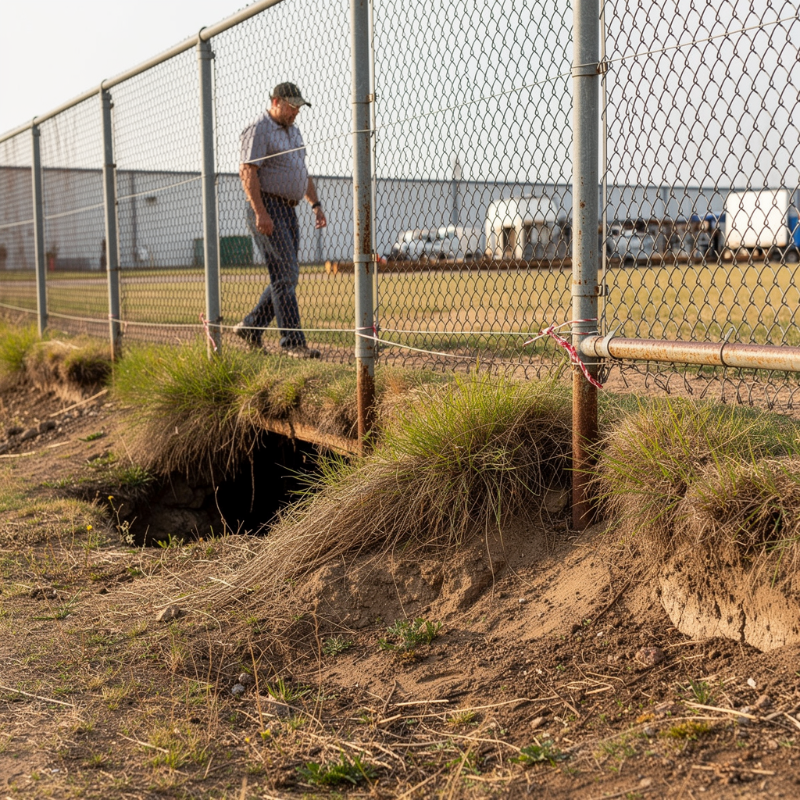
The concern is immediate. These openings may allow unauthorized access. They may undermine the intended security function of the site. They may signal deeper structural issues that extend beyond the visible gap.
Uncertainty follows. Is the problem localized to one section, or does it indicate broader degradation along the fence line? The answer often depends on factors that are not immediately visible from surface inspection.
For commercial operators responsible for site security and perimeter integrity, this kind of discovery raises questions about how the gap formed, how long it has been developing, and what it means for the rest of the system.
These concerns are practical, not theoretical. A gap at the bottom of a commercial fence changes how the system performs its intended function. It introduces ambiguity into what was supposed to be a clear boundary.
How Gaps Actually Develop in Commercial Chain Link Systems
A commercial chain link fence is a woven steel fabric attached to posts, rails, and hardware. The system is designed to create a continuous barrier along the ground. When that continuity breaks down, gaps appear.
Posts move when soil conditions change. In soft or disturbed ground, posts can shift, lean, or settle. This changes the relative height of the fence fabric to the grade below. Even small movements at the post can translate into visible gaps at the bottom of the fabric.
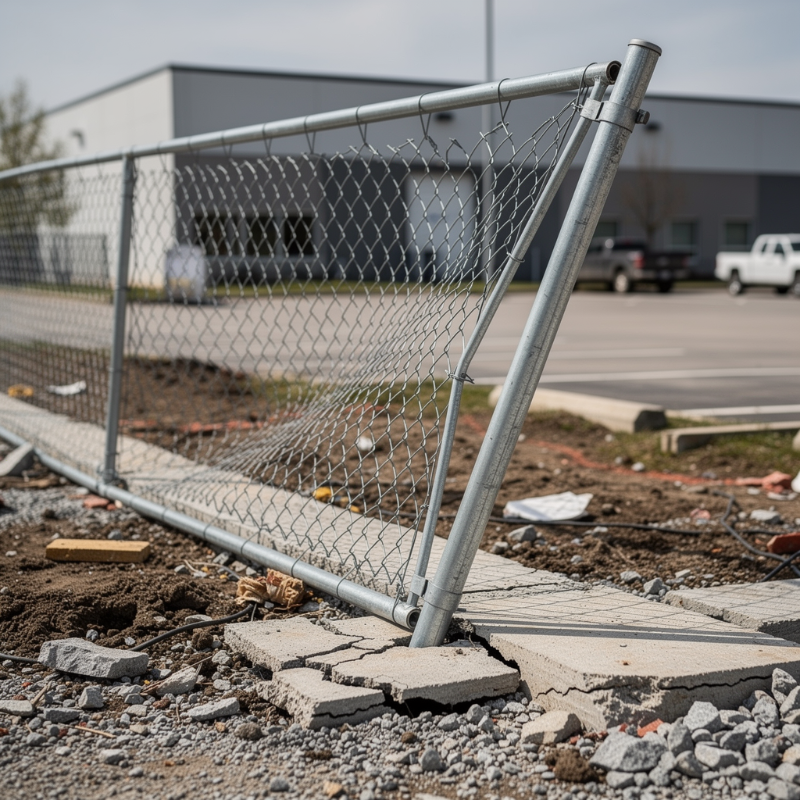
Corrosion weakens the hardware that holds the system together. Tie wires, rail ends, and post bases are common points where rust develops first. When these connections deteriorate, fabric can loosen, sag, or detach from its intended position.
Fabric tension changes over time. When ties fail or posts shift, the woven mesh no longer maintains its original alignment. Sections begin to sag. The bottom edge lifts away from the ground.
High-use sections experience more stress. Gates, corners, loading areas, and vehicle access points see repeated mechanical impact. Equipment contact, plow damage, and incidental collisions can bend rails or posts and deform the fabric. These areas tend to show gaps earlier and more prominently than low-traffic runs.
Visible bottom gaps often appear alongside other signs. Sagging fabric, sections that no longer line up with adjacent panels, and inconsistent tension along the run all indicate that the system is performing differently than it did at installation.
In practical terms, bottom gaps are rarely the result of a single failure. They usually reflect a combination of environmental factors, soil movement, corrosion, fatigue at tie points, and sometimes historic repairs that altered the original line and elevation of the fence.
Why These Gaps Matter for Commercial Operators
Reliability is affected when fabric tension changes and gaps appear. A commercial chain link fence is expected to maintain continuous contact or close clearance to the ground along the entire perimeter. When sections show visible openings, the system is no longer performing as originally designed.
Safety and security are impacted when openings permit animals, equipment, or unauthorized individuals to pass through or manipulate the fence line. Even gaps that appear minor can become significant when they provide a point of entry or create a perceived weak spot in the perimeter.
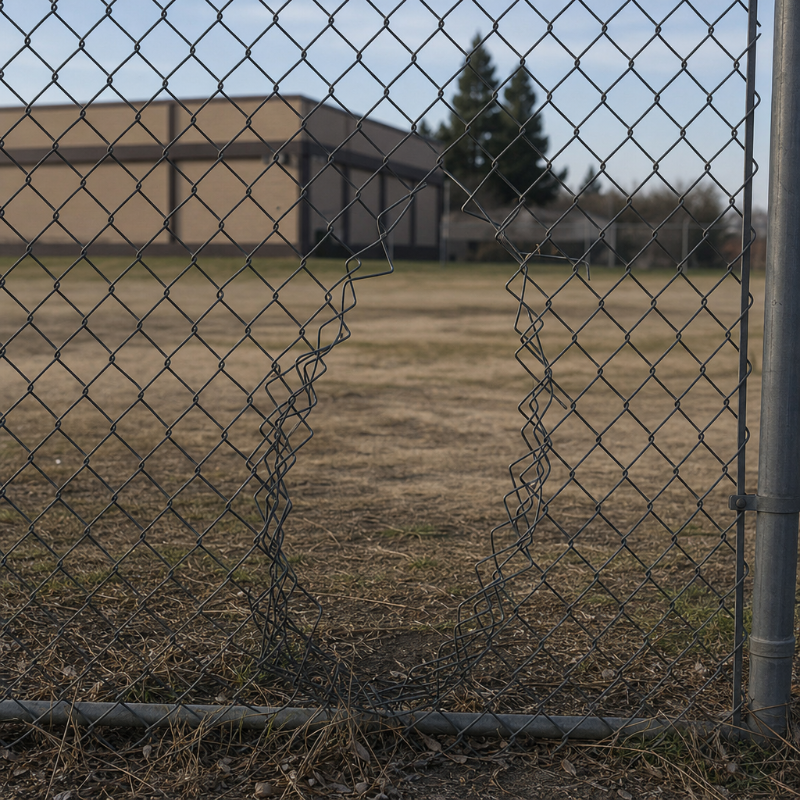
Durability is influenced by corrosion at post bases and hardware. Environmental stresses that alter soil and grade accelerate this process. In climates with freeze-thaw cycles, snow storage, and seasonal moisture variation, these conditions are part of the operating environment rather than unusual events.
Long-term cost is shaped by whether small gaps and movement are monitored early or allowed to evolve into larger structural issues. When sections lose proper support, movement and stress redistribute along the fence line. Problems that start at one post or tie point can affect adjacent sections over time.
Usability matters for sites with vehicle and equipment traffic near the fence. Gaps at the bottom of fences or under gate frames can create trip points or entrapment spaces for equipment, carts, or personnel moving close to the fence line.
In a commercial context, the visual presence of gaps can affect how the perimeter is perceived as a security measure. Appearance is secondary to function, but persistent openings signal to anyone evaluating the site that the system may not be performing at its intended level.
Common Misunderstandings About Chain Link Fence Gaps
Some stakeholders treat chain link security fencing as a static, maintenance-free installation. The assumption is that once the fence goes in, the bottom line will remain tight to grade indefinitely without adjustment or monitoring.
This does not reflect how posts, soil, and hardware behave over time. Soil settlement, freeze-thaw cycles, corrosion, and operational impacts all contribute to ongoing change at the fence line. In Northern Nevada, where seasonal temperature variation and snow load are part of normal conditions, these forces act on the fence every year.
Another common assumption is that bottom gaps are always the result of installer error. In practice, gaps often develop gradually from environmental and operational conditions that occur well after installation is complete. A fence that was tight to grade at commissioning can show gaps years later as the site and system interact.
Focusing only on gate alignment can cause operators to overlook bottom gaps under the gate leaf and adjacent fabric. Gate frames can sag, and the sections immediately next to gates often experience more stress than mid-run fence. Both areas deserve attention during perimeter evaluations.
Treating corrosion as a cosmetic issue ignores its role in loosening ties and hardware that keep the fabric tight to grade. Rust at post bases, tie wires, and rail ends directly affects tension, structural continuity, and the development of bottom gaps.
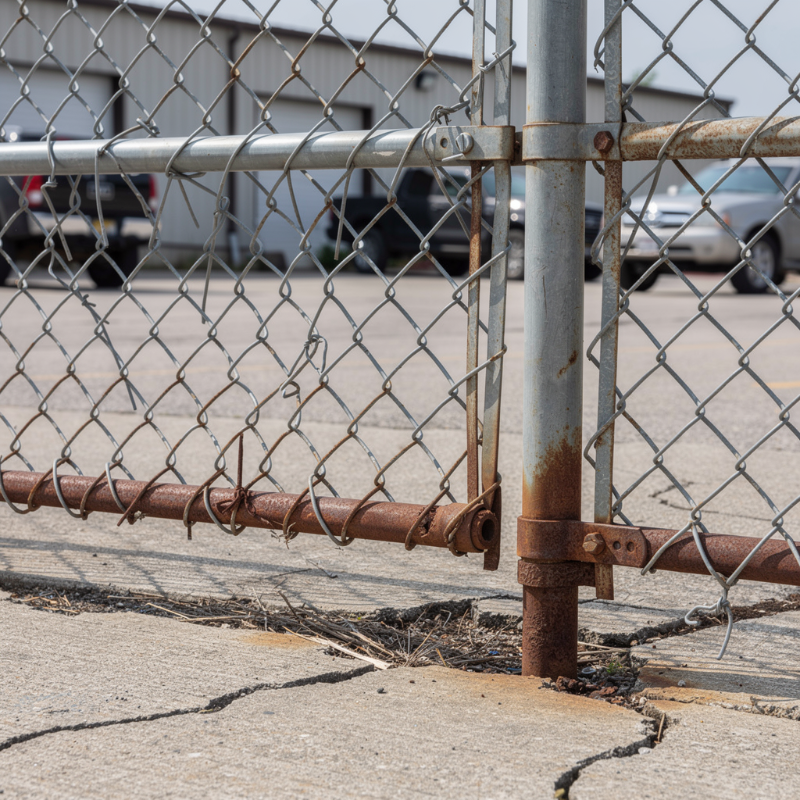
What looks like surface wear may indicate that the hardware is no longer holding the system in its designed position.
How This Shows Up on Commercial Sites in Northern Nevada
Walking a perimeter on a commercial property typically reveals more pronounced gaps at gates, corners, loading areas, and vehicle access points. These are the zones where stress and impact concentrate. Repeated use, equipment contact, and operational traffic all contribute to faster wear in these areas.
Corrosion at tie wires, rail ends, and post bases often corresponds with sections of sagging fabric or bottom openings. Where hardware has deteriorated, the fabric is less likely to maintain its original tension and position relative to the ground.
Posts that lean or have shifted in soft soil change fence elevation against the grade. This is common in areas where soil has been disturbed, where drainage concentrates moisture, or where freeze-thaw cycles heave and settle the ground over multiple seasons.
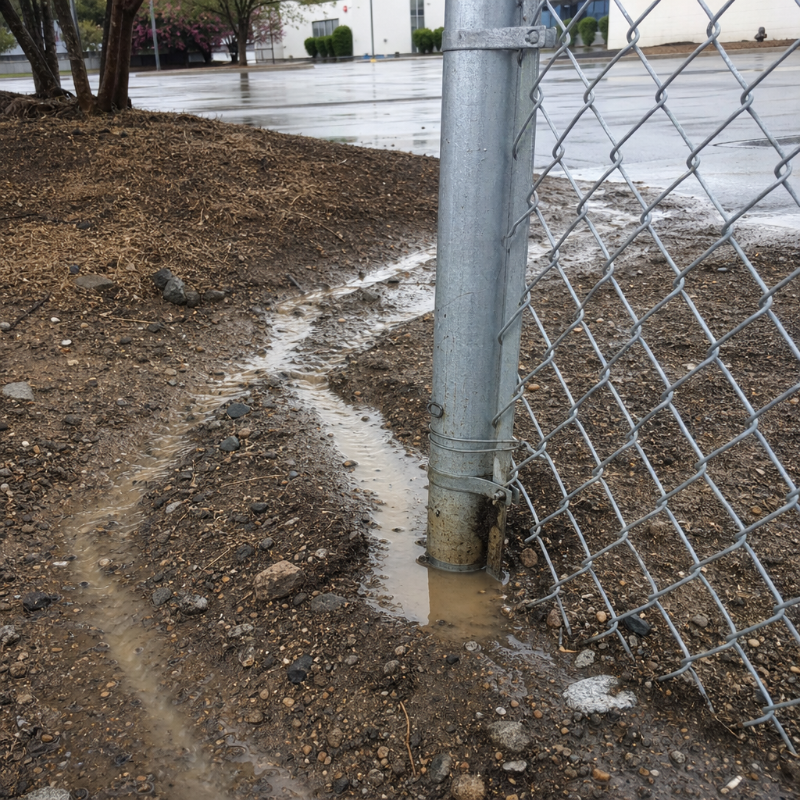
Gaps often coexist with other indicators. Misaligned panels, inconsistent fabric tension along the run, and sections that no longer line up with adjacent posts all suggest that the system has changed since installation.
These patterns are typical on commercial sites rather than rare anomalies. Property managers, general contractors, and facility directors who walk perimeters regularly tend to recognize these signs as part of ongoing maintenance reality.
Connecting Gap Formation to Professional Assessment
Questions about why gaps form under commercial chain link fences commonly arise during professional assessments of existing perimeter systems. Property managers reviewing overall fence condition, general contractors evaluating scope for phased repairs, and facility directors addressing compliance or security concerns all encounter these issues.
Fence and gate repair evaluations typically include systematic walks of the perimeter with attention to gates, corners, loading areas, and vehicle access points. These zones show more gaps and structural change due to higher use and impact.
Post bases, hardware connections, and fabric tension are all part of the assessment. Identifying where corrosion has developed, where posts have moved, and where ties have failed helps clarify whether an observed gap is isolated or part of a broader pattern.
For commercial operators coordinating maintenance or budgeting future repairs, understanding the mechanics behind gap formation provides useful context. It helps frame repair discussions around system performance rather than individual symptoms.
What Gap Formation Means for Perimeter Maintenance
Gaps under commercial chain link fences are best understood as visible symptoms of how the fence system has interacted with soil, environment, corrosion, and use over time. They are not isolated flaws that appear randomly.
Viewing bottom openings in relation to fabric tension, post movement, hardware condition, and site traffic patterns provides a more accurate picture of fence performance. Some uncertainty will remain about how far an observed gap reflects wider perimeter issues until the full line is systematically reviewed.
For general contractors, property managers, and facility directors in Reno and surrounding Northern Nevada communities, recognizing these patterns supports better planning and more informed decisions about repair timing and scope.
A1 Fence LV works with commercial clients throughout Northern Nevada on fence and gate repair evaluations that address these kinds of perimeter concerns. If you are reviewing an existing system or coordinating repairs on a commercial site, you can request a quote online at https://a1fencelv.com/request-a-quote, call 775-451-3328, or email lalo@a1fencelv.com.
source https://a1fencelv.com/why-gaps-form-under-commercial-chain-link-fences/

No comments:
Post a Comment